
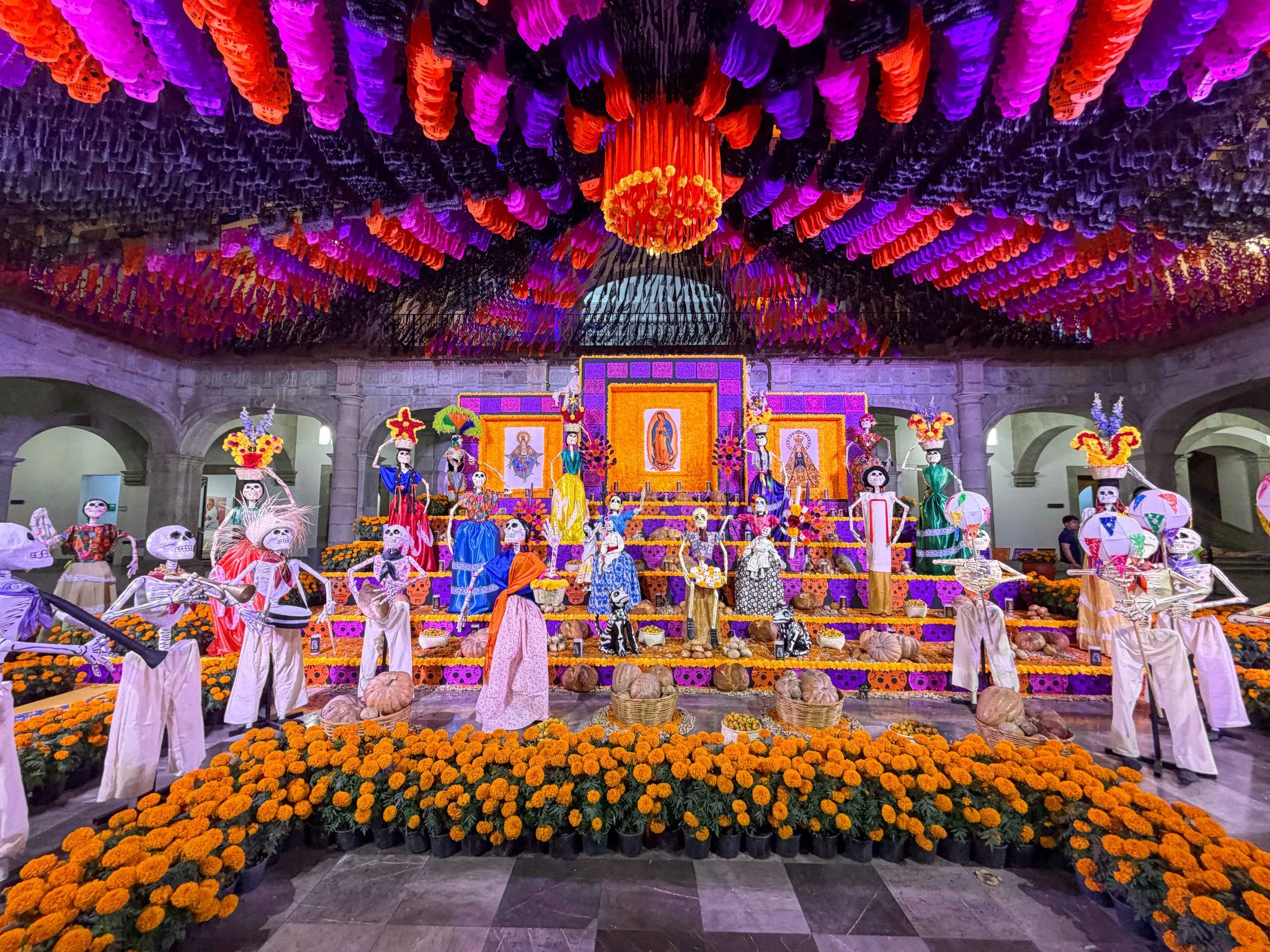
Altars filled with flowers, food, drinks, and other offerings welcome departed loved ones home during Día de Muertos.
When I think about Día de Muertos, the first thing that comes to mind is a big celebration that is just around the corner. Preparations begin in early August, when marigolds are planted. Then, at the beginning of October, people start making totopos—large, crispy tortillas, almost like giant tostadas—for the big day here in La Mixteca, a region in Oaxaca. Every member of the family knows their role in preparing for this long-awaited event. Our deceased family members and relatives will come to visit us over these two days. We have missed them so much since the last time we were together. There is so much to talk about, and sometimes there are even a few tears when we visit them at the cemetery.
Grandmothers lead the tradition by cooking their specialties, as well as the favorite dishes of our departed loved ones. They do not forget anything, not even the smallest detail. Fathers and uncles take charge of the decorations, such as marigold arches. They teach the younger generations how to make marigold necklaces and garlands to hang over the doors. Even the youngest family members help by carefully separating the marigold petals and arranging them in lines to show our loved ones the way to our homes.
Many families across Mexico honor this tradition, which has been passed down through generations. Every second counts, and every action is carried out with deep respect and love.
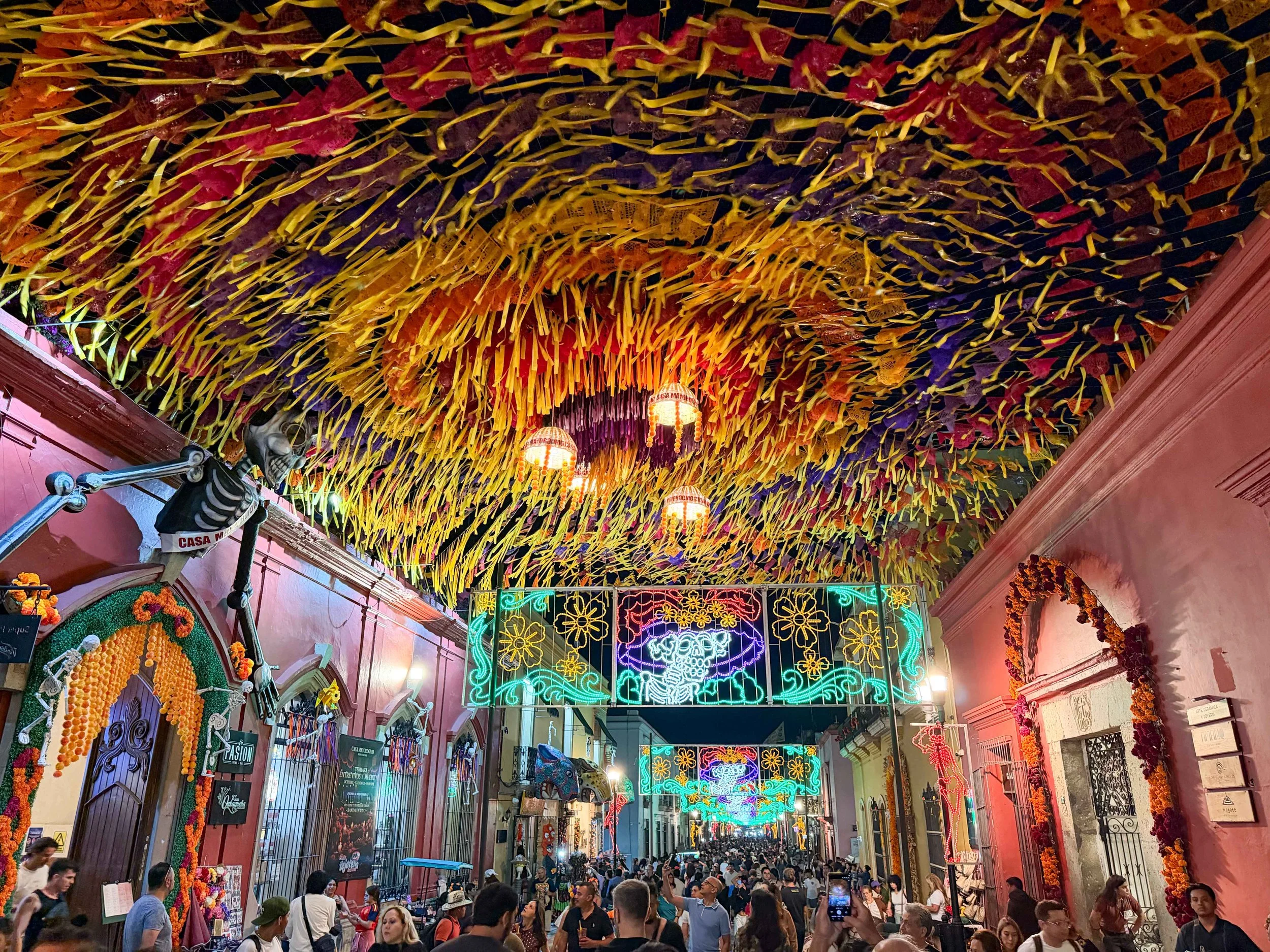
Across Oaxaca, Día de Muertos transforms communities as families prepare to welcome and remember their departed loved ones.
On the big day, families take a break from their daily routines and focus entirely on spending time together and welcoming their dearest ones who have been away.
The smell of copal fills the air throughout the day. An altar has been prepared, and our loved ones' favorite fruits and drinks are placed on it as offerings.
Our grandmothers serve the food, calling each departed family member by name.
“Felipe, here is the beef stew I made especially for you, just the way you like it,” my grandmother would say.
Once she has offered each dish and placed everything on the altar, it is our turn to enjoy a delicious meal and share a drink with them. We carry our pain and sadness quietly in our hearts so that, during this special moment, we can offer them the very best of ourselves.
Día de Muertos is a celebration of life. It is a time when we welcome our departed relatives, remember them, and celebrate the lives they lived when they were still with us. We reflect on how fragile and beautiful life is, and we are reminded that, even though our loved ones are no longer physically present, the love we share with them never truly disappears.
If this story moved you, your support helps OYE continue creating opportunities for young people and communities across Oaxaca.